Mac app · 2026
Facet
Game design is one of my personal passions, and that’s where Facet started. It’s a Mac app I designed for running AI coding agents on big projects, and it works on any kind of project, not just games. You break a project into parts, say what good looks like for each one, and Facet sends Claude or Codex off to improve them. Nothing changes until you’ve seen the before and after.
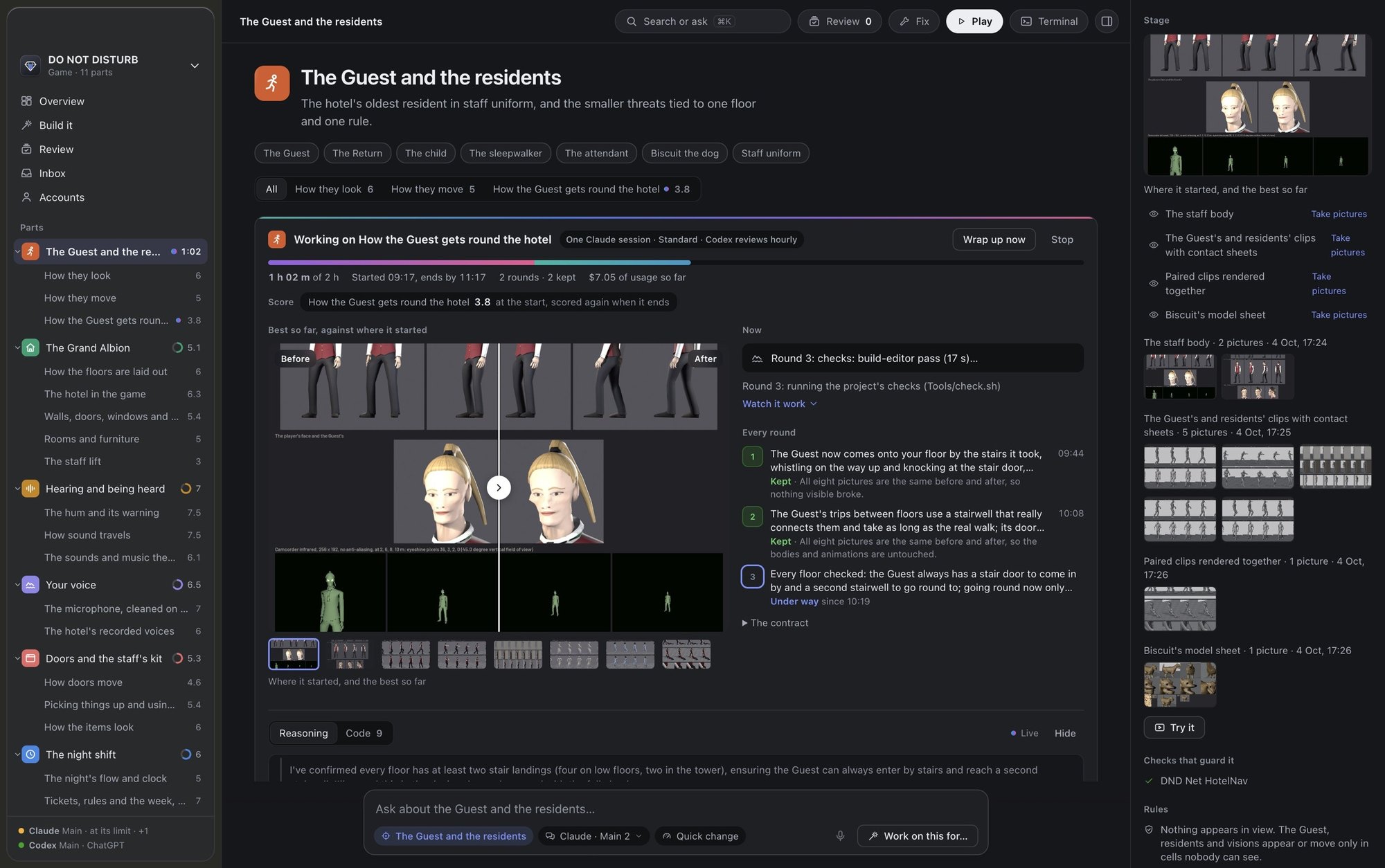
- 206,079lines of code in the game, split into 11 parts
- 46automated checks that guard those parts
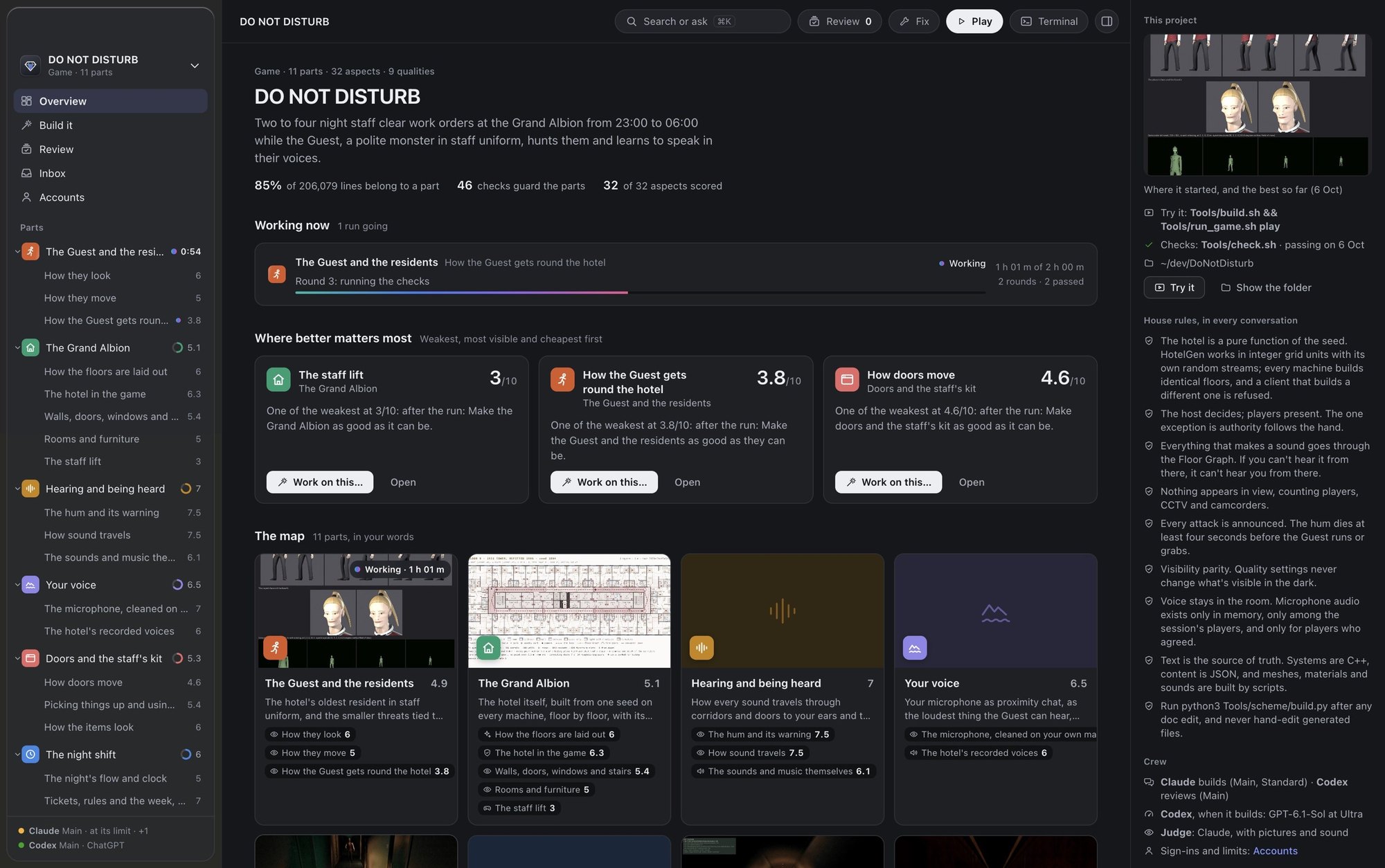
- 32things it scores out of 10, like how doors move
- ~47,000lines of TypeScript in Facet itself
Why I built it
I was using Claude and Codex to build games, and “make it better” wasn’t working. The agent would change a bit of everything, say it had all improved, and I couldn’t tell what had actually got better or what it had broken along the way.
I wanted to point at one part of a project, say what good looks like, and get proof back. Facet is the tool I wanted.
Games are what I use it for most, but nothing in it is specific to games. It works on any project that can be split into parts and checked, like a website or a data pipeline.
How it works
- It maps the project. Facet reads the code and docs and splits the project into parts in plain English. It then checks every file belongs to one of them.
- It scores each part. An AI judge looks at pictures and listens to sound and gives each aspect a score out of 10 with the evidence. The overview shows the weakest parts first.
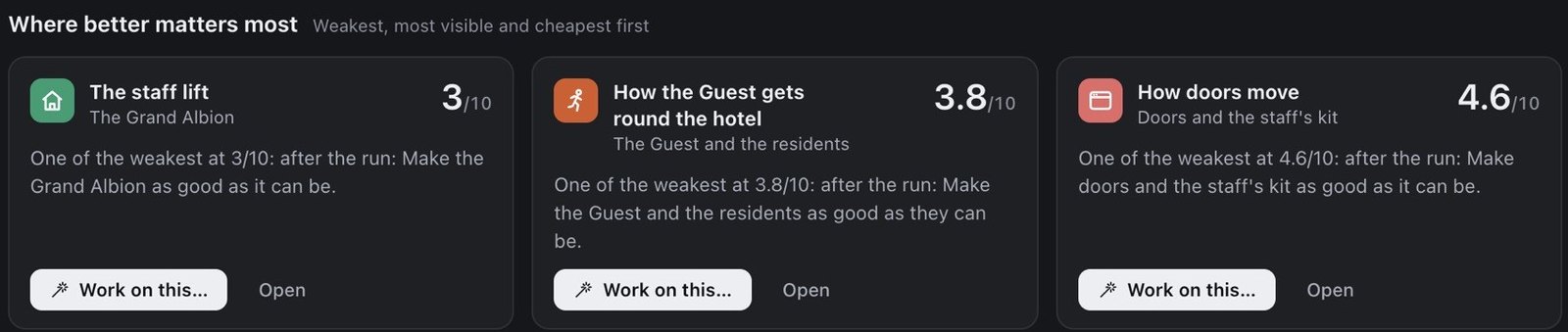
- You agree a contract. Every request comes back as three lines: what will change, how it will be judged, and what must stay the same. Work starts when you say go.
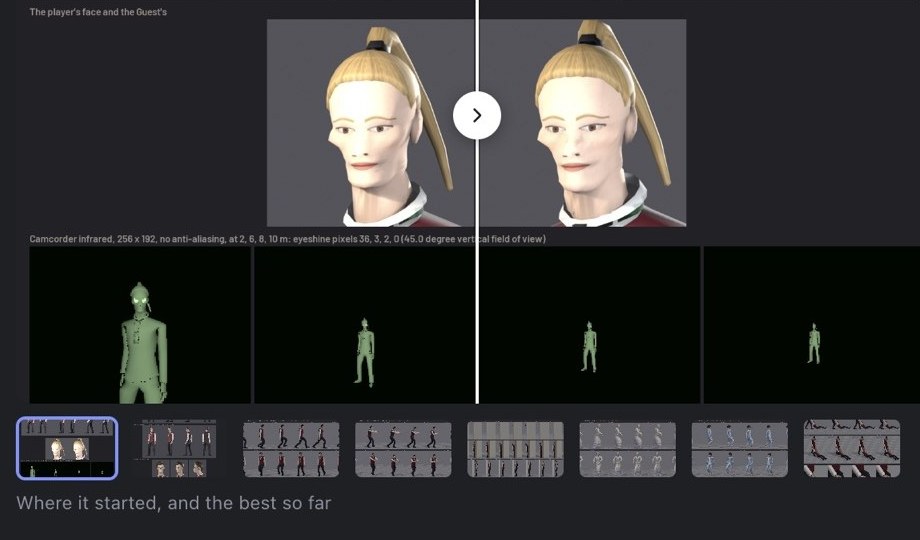
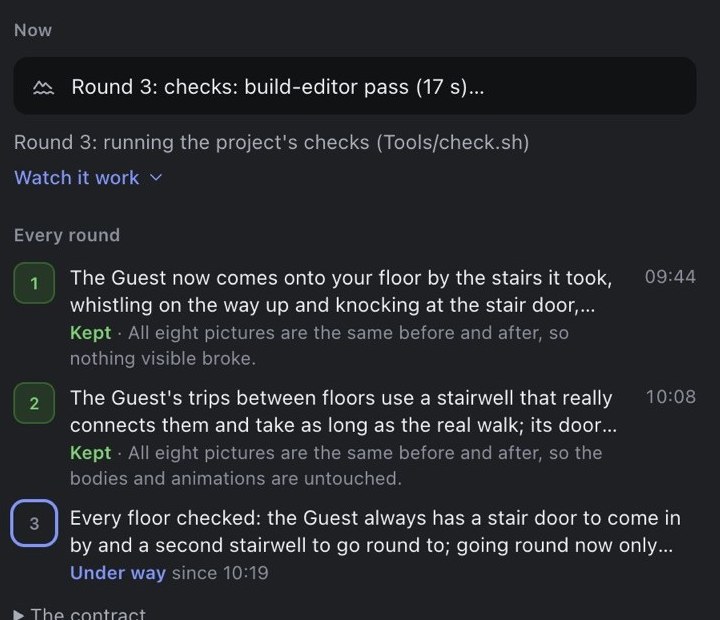
- The work happens in a copy. The agents work in a separate copy of the project, so nothing changes in yours until you press Keep, and the project’s own tests run first.
- It can run for hours. You can hand a part over for an afternoon. Claude does the work and Codex reviews it every hour. If one subscription hits its limit, the job moves to another account with the whole conversation and carries on.
How I built it
I wrote the spec, the design rules and the tests it had to pass. Claude and Codex wrote most of the code. My job was deciding what it should do, checking what came back and sending it back when it wasn’t right.
I’m applying for analyst jobs, not engineering ones. I’ve put Facet first because it shows how I like to work: break a problem into parts you can measure, decide what good looks like before starting, and don’t accept a result without evidence.